From Bottleneck to Flow: The Strategic Power of a Truck Unloader Conveyor
When inbound trailers stack up and labor is stretched thin, every minute at the dock counts. A well‑specified truck unloader conveyor turns chaotic receiving into a predictable, safe, and high‑throughput process. By bridging the gap between trailer and facility with powered, mobile conveying, operations can cut dwell time per bay, reduce manual strain, and harmonize upstream and downstream workflows—whether you’re processing e‑commerce parcels, consumer goods, or palletized and bagged materials in mixed logistics environments.
What Is a Truck Unloader Conveyor and Why It Matters
A truck unloader conveyor is a mobile or semi‑fixed conveyor system designed to extract goods directly from trailers, containers, or vans and transfer them into a facility’s sorting or storage flows. Unlike static belts inside a warehouse, these units are engineered for the realities of dock work: variable trailer heights, tight spaces, uneven floors, and fluctuating inbound volumes. They often feature extendable booms, height adjustment, and powered belts or rollers, allowing an operator to position the discharge precisely where it’s needed.
Core variations include telescopic belt conveyors for parcels and cartons; flexible powered or gravity roller conveyors for mixed cartons and totes; and hopper‑fed units for bagged or loose materials. Many models incorporate steerable undercarriages and hydraulic elevation, so the discharge point can align with mezzanines, sorters, or takeaway lines. In express and cross‑border logistics especially, the goal is continuous flow: goods should exit a trailer at a controlled rate, move seamlessly to induction, and join automated sorting without creating chokepoints.
The business impact is immediate. First, throughput rises: a single operator with a powered boom can move hundreds to thousands of items per hour, relieving the need for large teams inside hot trailers. Second, ergonomics and safety improve: fewer long carries, less awkward lifting, better lighting and visibility at the trailer mouth, and reduced trip hazards compared to ad‑hoc roller tables. Third, predictability increases: with speed controls and sensors, the conveyor meters product into downstream processes, making staffing and scheduling more accurate during peak seasons.
Industries from parcel and retail DCs to manufacturing and agricultural trading deploy truck unloader conveyor systems because they scale. During peaks, additional mobile units can be rolled to active doors. During lulls, they park compactly to free dock space. In regions with rapidly growing e‑commerce and cross‑border flows, this flexibility is often the difference between on‑time cutoffs and late linehauls.
Key Design Features, Specifications, and Safety You Should Evaluate
Specifying the right truck unloader conveyor starts with data: package mix, weight range, daily trailer counts, dock layout, and downstream equipment. From there, translate needs into must‑have features and measurable specs. Throughput is foundational; look for adjustable belt speeds (typically 0.2–2.0 m/s) and motor power sized for your heaviest loads. For parcels and cartons, belt widths of 600–1,000 mm handle most SKUs; for bags or irregulars, consider cleated belting or side guides to control rollback and spillage.
Extendable reach is critical. Telescopic booms should cover common trailer lengths while maintaining stiffness to reduce bounce and energy loss. Height control—electric or hydraulic—lets operators align the infeed with the trailer floor and manage ergonomic load heights. If your facility handles short dwell “drop and go” operations, fast boom deployment and intuitive joystick controls minimize setup time per door.
Durability and maintainability pay off over the life of the asset. Look for abrasion‑resistant belts, sealed bearings, and IP‑rated motors (IP54 or higher) for dusty or humid climates. Variable frequency drives (VFDs) smooth acceleration, protect motors, and enable fine‑tuned speeds that sync with sorters or accumulation conveyors. Quick‑change belt designs, slide‑out idlers, and centralized grease points shorten planned downtime. Where debris is common, belt scrapers and catch trays keep the work area clean and reduce slip hazards.
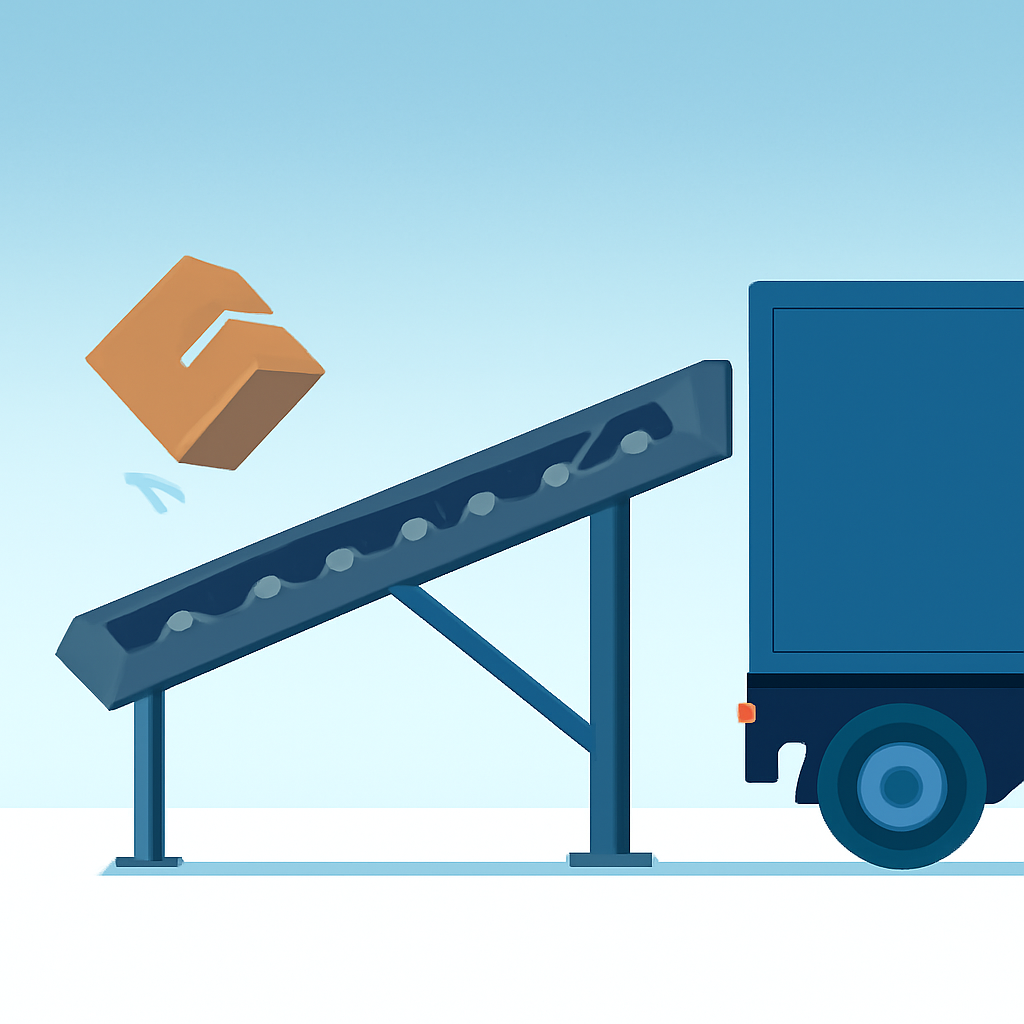
Integration elevates performance from “faster unloading” to “smarter flow.” Photo‑eyes and jam sensors, PLC connectivity, and upstream/downstream interlocks help pace the line. Adding stack lights and audible alerts improves communication on busy docks. On mobile units, stability and maneuverability matter: solid wheel locks, ergonomic tow bars, and narrow chassis profiles help navigate tight aisles without compromising safety.
Speaking of safety, make it non‑negotiable. Guard pinch points and rotating components; provide emergency stop buttons within easy reach both at the infeed and discharge; and specify low‑glare LED task lighting at the trailer mouth. Anti‑rollback features, soft‑start/stop profiles, and collision‑avoidance bumpers reduce incidents in shared spaces. Comprehensive operator training and lockout/tagout procedures ensure consistency across shifts. When evaluating suppliers, prioritize those who validate designs against relevant standards and can support commissioning, spares, and after‑sales service close to your region.
If you’re comparing solutions for parcels, totes, or bagged goods, a single category rarely fits all. Many facilities combine an extendable boom at the door with flexible conveyors downstream to “fan out” into induct points, creating a modular train that aligns with changing product mixes. Explore product families that offer this modularity under one ecosystem, such as a portfolio anchored by a truck unloader conveyor complemented by flexible and fixed lines.
Deployment Scenarios, ROI, and Real‑World Examples
Upgrading unloading is not only about speed; it’s about cost per handled unit and predictable service levels. Consider a parcel operation receiving 30 inbound trailers per day, averaging 2,000 parcels each. Manual unload with a roller line might average 1,000 parcels/hour with a 4‑person team, taking roughly two hours per trailer and 240 total labor hours per day. A powered truck unloader conveyor that lifts throughput to 1,800 parcels/hour cuts unload time to about 1.1 hours and reduces headcount to two operators, bringing daily unload labor closer to 66–70 hours saved. Even before considering reduced damages and injuries, those hours translate directly into lower operating costs and improved on‑time departures for sortation and linehaul.
In mixed‑cargo environments—think consumer goods, small appliances, and seasonal promotions—peak variability challenges workforce planning. Mobile units shine because they can be redeployed in minutes. During morning parcel waves, a telescopic unit supports small‑parcel docks; by afternoon, it shifts to handle bulkier cartons feeding a putwall. Facilities in fast‑growing logistics corridors often report that a single unit reduces bay congestion and expedites yard turns, yielding measurable reductions in detention and demurrage.
For bulk bags, agricultural produce, or rubber bales, a hopper‑fed design adds control. By staging materials in a feed hopper and metering onto the belt, the conveyor prevents surges that overwhelm sorters or manual stations. Cleats or rough‑top belting mitigate rollback on steeper angles when trailers are not perfectly leveled. Pairing with dock levelers and wheel chocks forms a safe “ecosystem” that protects both people and product.
Deployments typically follow a straightforward roadmap: site assessment and data capture (bay clearances, power availability, trailer mix), concept design and selection (boom length, belt width, mobility requirements), and integration planning (controls handshakes, safety zoning). Commissioning includes operator training and establishing KPIs such as unload time per trailer, dock dwell per bay, jams per 10,000 pieces, and recordable incidents. Within the first 90 days, many sites fine‑tune belt speed setpoints and staging layouts to lock in gains.
Consider a regional express hub serving cross‑border e‑commerce. Before modernization, dwell per trailer averaged 95 minutes with frequent jams at induction. After introducing an extendable truck unloader conveyor synchronized to sorter capacity, dwell dropped to 58 minutes, damages decreased as parcels no longer free‑fell into cages, and overtime during peak weeks fell by double‑digit percentages. A manufacturing plant receiving mixed cartons realized similar gains by integrating an extendable unit at Door 3 and a flexible powered roller downstream; by distributing flow to two induction lanes, they halved queue times.
Ultimately, ROI emerges from a blend of labor optimization, faster cycle times, and lower risk. Fewer touches mean fewer damages; stable pacing lowers sorter stoppages; ergonomic design reduces fatigue and injuries. When evaluating vendors, look for a partner invested in R&D and responsive service—traits that matter during ramps, retrofits, and seasonal surges. In regions with vibrant manufacturing and logistics sectors, proximity to engineering support and parts stock shortens downtime and keeps the dock moving at the speed your customers expect.

Sarah Malik is a freelance writer and digital content strategist with a passion for storytelling. With over 7 years of experience in blogging, SEO, and WordPress customization, she enjoys helping readers make sense of complex topics in a simple, engaging way. When she’s not writing, you’ll find her sipping coffee, reading historical fiction, or exploring hidden gems in her hometown.
About The Author

Sarah Malik
Sarah Malik is a freelance writer and digital content strategist with a passion for storytelling. With over 7 years of experience in blogging, SEO, and WordPress customization, she enjoys helping readers make sense of complex topics in a simple, engaging way. When she’s not writing, you’ll find her sipping coffee, reading historical fiction, or exploring hidden gems in her hometown.