Stopping Forgeries Before They Cost You: The New Frontier of Document Fraud Detection
Why document authenticity matters in the age of AI
In a world where AI technology is reshaping how we interact, create, and secure data, the stakes for authenticity and trust have never been higher. With the advent of deep fakes and the ease of document manipulation, businesses face not only financial losses but also regulatory penalties and long-term reputational damage when fraudulent documents slip through verification processes.
Fraudulent documents range from simple alterations—such as changed figures on an invoice—to sophisticated synthetic identities, forged passports, and AI-generated certificates that mimic genuine security features. The economic impact is significant: payment fraud, account takeover, fraudulent claims, and supply-chain manipulation all exploit weak verification controls. Equally important are the non-financial costs, including loss of customer confidence, exposure to legal liabilities, and the erosion of brand value when a single high-profile fraud becomes public.
Regulated industries such as finance, healthcare, and government are under intense pressure to implement robust controls that can demonstrably verify document integrity. Effective defenses require more than checking surface-level cues; modern defenses must detect subtle inconsistencies in fonts, metadata, microprinting, image composition, and behavioral signals. Embracing document fraud detection as a strategic capability helps organizations maintain compliance, reduce operational losses, and preserve trust across customer journeys.
Techniques and technologies powering modern detection systems
Contemporary solutions blend traditional forensic methods with AI-driven analytics. Optical character recognition (OCR) extracts typed and handwritten content for semantic comparison, while image-forensic tools analyze compression artifacts, color histograms, and print-to-scan degradation to reveal tampering. Machine learning models trained on large corpora of genuine and forged documents can detect anomalies invisible to the human eye, such as inconsistencies in kerning, microline distortions, or improbable noise patterns.
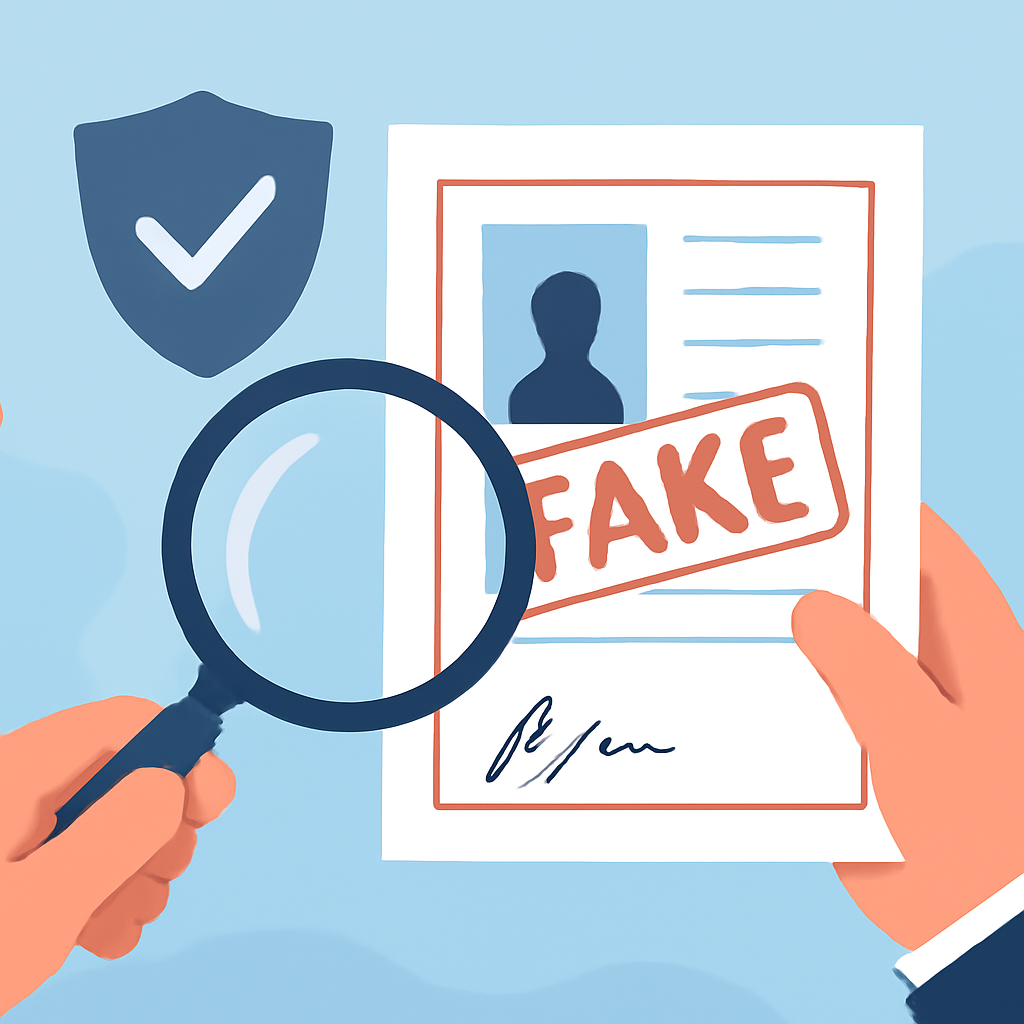
Beyond pixel-level checks, metadata analysis examines file creation dates, editing histories, and embedded device identifiers to surface improbable timelines or mismatched toolchains. Biometric and behavioral signals—liveness checks during ID capture, typing rhythm analysis, and geolocation consistency—add another layer that ties a document to a living user. Cryptographic approaches, like digital signatures and blockchain-based anchoring, enable tamper-evident proofs of origin and version control for high-value documents.
A multi-layered approach combining automated screening and human review reduces false positives while increasing detection sensitivity. Many organizations now evaluate vendor offerings to deploy specialized document fraud detection tools that integrate OCR, neural networks, forensics engines, and workflow automation. The right combination of technologies depends on risk profile, throughput needs, and regulatory requirements; effective deployments are modular, continuously updated, and tuned to evolving fraud patterns.
Implementation strategies, real-world examples, and risk mitigation
Deploying an effective program starts with risk-based segmentation: prioritize verification for high-value transactions, new customer onboarding, and regulatory reporting. Real-world implementations often combine passive checks (metadata and image analysis) with active verifications (video liveness, challenge-response) and human-in-the-loop escalation for ambiguous cases. For example, a financial institution might use automated forensics to flag discrepant IDs, then route suspicious cases to a verification specialist for manual inspection and secondary document requests.
Case studies illustrate how layered defenses pay off. In one scenario, an insurer detected a network of altered medical invoices by correlating suspicious formatting anomalies with inconsistent provider identifiers in metadata. In another, border control agents thwarted a synthetic identity ring by combining high-resolution document inspection with cross-border watchlists and biometric matching. These examples show that technology alone is insufficient; operational processes, auditor trails, and inter-agency data sharing amplify detection effectiveness.
Risk mitigation also requires continuous adaptation. Fraudsters leverage generative models to create convincing forgeries and iterate rapidly; defenses must likewise incorporate ongoing model retraining, adversarial testing, and threat intelligence feeds. Governance and training are critical—clear escalation pathways, documented decision criteria, and regular analyst calibration reduce drift and bias. Finally, legal and privacy considerations must be balanced: collecting sufficient evidence for remediation while maintaining compliance with data protection laws and preserving customer experience.

Sarah Malik is a freelance writer and digital content strategist with a passion for storytelling. With over 7 years of experience in blogging, SEO, and WordPress customization, she enjoys helping readers make sense of complex topics in a simple, engaging way. When she’s not writing, you’ll find her sipping coffee, reading historical fiction, or exploring hidden gems in her hometown.
About The Author

Sarah Malik
Sarah Malik is a freelance writer and digital content strategist with a passion for storytelling. With over 7 years of experience in blogging, SEO, and WordPress customization, she enjoys helping readers make sense of complex topics in a simple, engaging way. When she’s not writing, you’ll find her sipping coffee, reading historical fiction, or exploring hidden gems in her hometown.